
How to Win a Bidding War: A First-Time Home Buyer’s Guide to a Competitive Mortgage Offer
In competitive housing markets across Massachusetts, Rhode Island, Florida, and New England, getting pre-approved for a mortgage is just the starting point. In a multiple-offer situation, every serious buyer has a pre-approval letter. What actually wins the home is how your offer is structured—and how prepared your mortgage team is before you ever make a bid.
Maritime Mortgage Corp is an independent mortgage broker licensed in MA, RI, FL, -& as Maritime Home Loans in ME, and NH. As a broker, we work for you—not a bank. We shop your loan across a network of wholesale lenders to find the best rate and program for your situation, then work with you and your Realtor to build an offer sellers take seriously.
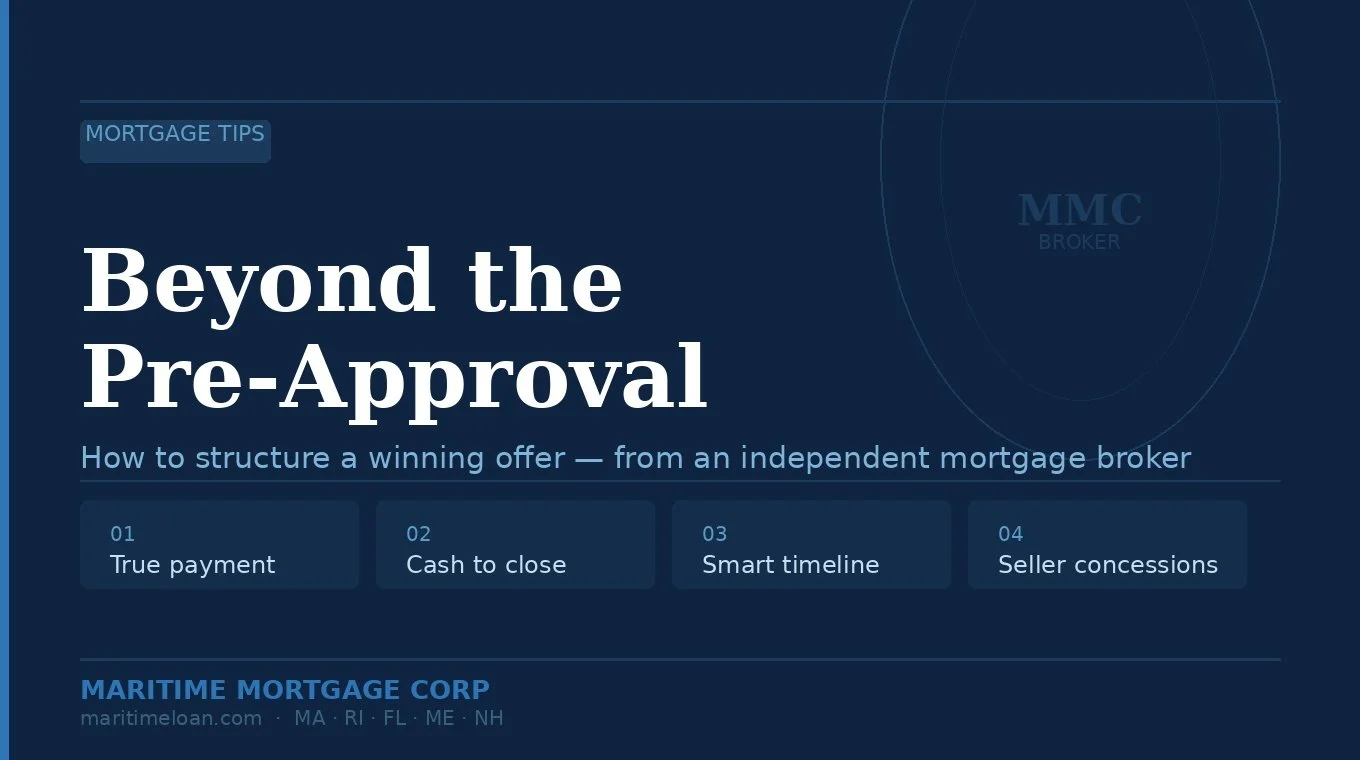
Here are the four things we focus on to give first-time home buyers a real competitive edge.
1. Know Your Real Monthly Payment Before You Bid
Most first-time buyers focus on the purchase price. But the number that actually affects your monthly budget is your PITIA—Principal (loan repayment), Interest (the cost of borrowing), Taxes (property taxes), Insurance (homeowners, mortgage, and flood insurance), and Association Dues (HOA/Condo Fees). Before you make an offer, we calculate all five for the specific home you want.
The Maritime Difference: We price your loan across multiple wholesale lenders in real time, using the actual property tax rate for that property, and a realistic homeowners insurance estimate- which is essential for coastal and FL properties. If there’s an HOA fee, we include that too. You know exactly what you’re committing to before you sign anything.
This matters for budgeting—but it also helps your real estate agent negotiate. If the numbers work at a higher price, you can bid confidently. If they don’t, you know before you’re under contract.
2. Understand Exactly How Much Cash You Need to Close
One of the most common first-time buyer surprises: the down payment is not the only money you need. Your total cash to close includes several components, and we break them all down for you upfront:
• Down Payment: Which ranges from loan program to loan program
• Closing Costs: These include origination fees, title insurance, attorney fees, appraisal, credit report, and transfer taxes.
• Prepaid & Escrows: At closing, lenders collect several months of property taxes and homeowners insurance upfront to cover prepaid items and fund your escrow account. Per diem interest is another often forgotten expense.
• Cash Reserves: Some loan programs require you to have additional savings left over after closing. We verify this early so it doesn’t become a problem later.
New to these terms? An escrow account is a separate account your lender manages to pay your property taxes and insurance automatically as they become due.
Having this full picture documented—before you’re in a bidding war—tells the seller there are no financing surprises waiting to derail the deal.
3. Propose a Timeline That’s Realistic—Not Just Fast
In a multiple-offer situation, sellers typically want two things: the best price and the most certainty. Setting unrealistic deadlines to look competitive is one of the most common first-time buyer mistakes. If you can’t hit the dates in your contract, you risk losing your deposit—the upfront money you put down to secure the home. Another mistake is ignoring the sellers wishes: offering a fast close when the seller asks for time is a quick way to make your offer less appealing.
Most purchase contract includes three key dates: the Offer deadline (the deadline for the seller to accept your offer), the Mortgage Commitment Date (the deadline for your lender to issue a formal loan approval), and the Closing Date.
The Maritime Difference: As an independent mortgage broker, we work with multiple wholesale lenders and know how long each one actually takes to process a file. We coordinate with your attorney and the listing agent to set dates that are competitive but achievable—whether you’re buying in a fast-moving suburb of Boston, a coastal Maine town, or a Florida market where timelines differ.
4. Know When to Ask for Seller Concessions
A seller concession is when the seller agrees to cover a portion of your closing costs as part of the deal. This can be a smart strategy for first-time buyers who are stretching to cover a down payment and closing costs at the same time—but it has to be used carefully. In a highly competitive market, asking for too many concessions can cost you the home.
The Maritime Difference: In markets where there is less competition—we may suggest using seller concessions to fund a temporary or permanent interest rate buydown. A rate buydown means paying extra at closing to reduce your mortgage rate either for a set period of time or for the life of the loan, which lowers your monthly payment. This can make a higher purchase price more affordable month to month without requiring more cash from you at closing.
We help you decide whether to use concessions, how much to ask for, and how to frame the request so it doesn’t weaken your offer in the seller’s eyes.
The Bottom Line for First-Time Home Buyers
Winning in a competitive housing market isn’t just about offering the most money—it’s about presenting an offer the seller trusts. When your payment is confirmed, your cash to close is documented, your timeline is realistic, and your mortgage broker has already done the prep work, your offer stands out.
Ready to get started?